
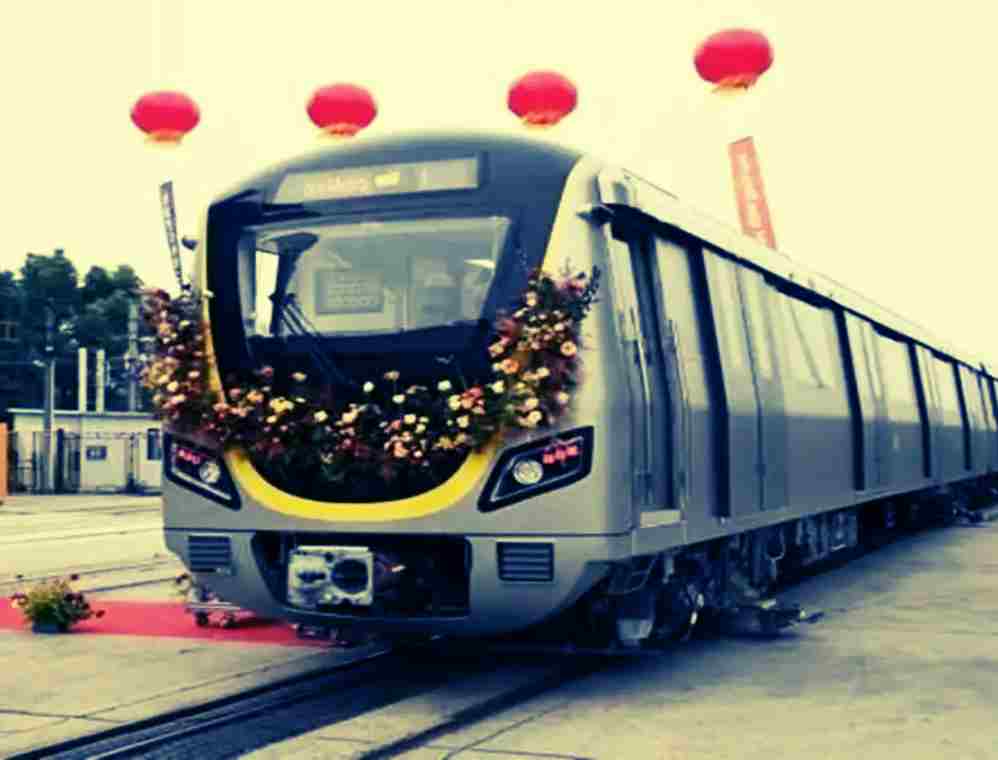
Bengaluru Steps Into a New Era of Commuting with Yellow Line Metro Launch
Bengaluru’s much-anticipated Yellow Line of the Namma Metro network officially opened its doors to the public on August 10, 2025, marking a major milestone in the city’s transportation journey. The launch was inaugurated with the presence of the Prime Minister, underscoring the significance of this infrastructure project for one of India’s busiest urban hubs.
The Yellow Line stretches approximately 19 kilometers, running from Rashtreeya Vidyalaya Road (RV Road) in South Bengaluru to Bommasandra in the southeastern part of the city. Along this route, 16 newly constructed stations now stand ready to welcome passengers, each designed with modern amenities and improved accessibility features. This corridor connects some of Bengaluru’s most high-demand zones, including the bustling Electronics City, the busy Silk Board junction, HSR Layout, and the healthcare hub of Jayadeva Hospital.
One of the biggest changes commuters will notice is the travel time. What once took up to an hour and a half in peak traffic can now be completed in roughly 35 minutes on the metro. This reduction is expected to dramatically improve daily routines for thousands of office-goers, students, and residents in the southern and southeastern parts of the city.
Operations on the new line begin early in the morning, with the first train leaving at 5:00 AM. Initially, three trainsets are being run, spaced 25 minutes apart, ensuring steady service while passenger patterns are observed. Interchanges along the Yellow Line add to its appeal — RV Road connects with the Green Line, Jayadeva Hospital is set to be an interchange with the upcoming Pink Line, and future plans include integration with the Blue Line.
The development of the Yellow Line has also been a testament to strong public–private collaboration. Certain stations were developed with corporate sponsorships, such as Konappana Agrahara supported by the Infosys Foundation and Hebbagodi station backed by Biocon. These partnerships have helped enhance the overall quality and design of the metro experience.
For Bengaluru’s tech industry and commercial sectors, the Yellow Line is being hailed as a game-changer. Many businesses, especially in the Electronics City corridor, have long struggled with the challenges posed by traffic congestion. The metro is expected to significantly ease these problems, improve productivity, and enhance employee well-being.
The launch also comes hand in hand with the formal beginning of Phase III of the Namma Metro project. This next phase will cover around 44–45 kilometers, focusing on further expanding connectivity to Bengaluru’s southern regions, with an investment estimated at over ₹15,000 crore.
As the city grows, the Yellow Line is more than just another transit route — it’s a bold step toward reshaping Bengaluru’s daily life. By reducing commute stress, opening up better job accessibility, and promoting sustainable urban travel, this new line promises to become a backbone for the city’s future mobility.
Disclaimer
The information and content shared on digitalgithub.com — including articles, blogs, news, guides, and other resources — is intended for general informational and educational purposes only. We do not guarantee the completeness, reliability, or suitability of any information. Always seek the guidance of a qualified professional before making decisions based on the information you read. Use this site at your own risk.