
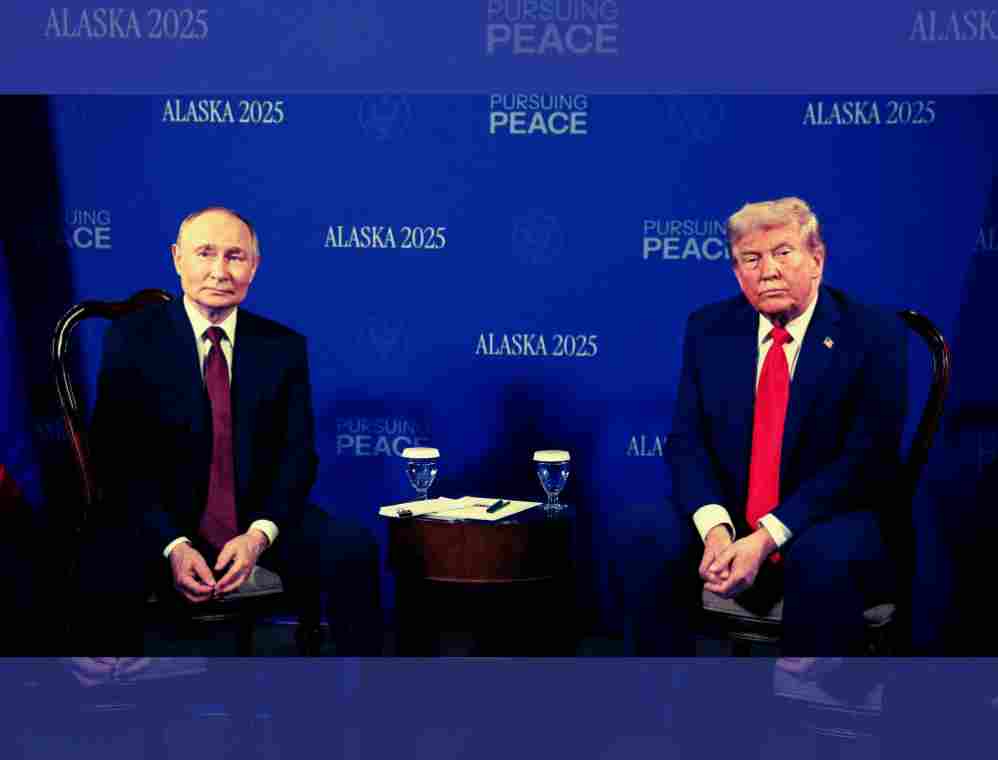
Trump and Putin Meet in Alaska: Talks End Without Ukraine Breakthrough
The stage was set for a historic moment in Anchorage, where U.S. President Donald Trump and Russian President Vladimir Putin met face-to-face in an attempt to bring the brutal war in Ukraine closer to an end. Military jets roared overhead, the red carpet was rolled out, and television cameras captured the carefully choreographed arrival. The images were designed to signal strength, diplomacy, and hope for progress.
Yet, after nearly three hours behind closed doors, both leaders walked away with no formal agreement in hand.
Symbolism Over Substance
The summit, held at Joint Base Elmendorf-Richardson, was meant to be a dramatic gesture—two of the world’s most powerful men meeting in one of America’s farthest northern states, a symbolic halfway point between Washington and Moscow.
Trump appeared confident, telling reporters afterward that “great progress” had been made, but his words were notably vague. “We’ve agreed on many points, and I believe peace is possible. But there’s no deal until there’s a deal,” he said.
Putin, speaking alongside him, echoed that sentiment with his own measured language. He hinted at “understandings” reached, while urging others—including Ukraine and its European allies—not to derail the fragile momentum that had emerged.
The Missing Voice: Ukraine
The most glaring absence in Alaska was Ukraine itself. President Volodymyr Zelenskyy was not part of the summit, a decision that immediately raised concerns in Kyiv and among European leaders. For Ukraine, which continues to endure devastating strikes and heavy casualties, any talks that happen without its direct involvement risk feeling illegitimate or one-sided.
Ukrainian officials quickly reacted with skepticism, reminding the world that no peace can be real if it is negotiated over their heads. The fear in Kyiv is clear: that their fate could be bargained away in rooms they are not invited into.
A Win for Putin?
For many observers, Putin’s very presence in Alaska was a symbolic victory. After years of being isolated by Western powers, the summit placed him back at the center of global diplomacy. Cameras captured him side by side with the American president, shaking hands, smiling for the world’s press, and leaving with the impression that Moscow’s voice must still be reckoned with.
Even without a signed deal, Putin achieved something valuable: an image of parity with Washington, and a platform to portray himself as a key player in the path to ending the war.
Trump’s Calculated Approach
For Trump, the outcome was more delicate. He avoided the political risk of appearing to abandon Ukraine, yet he also avoided confrontation with Putin. His repeated phrases about “progress” were carefully chosen—neither admitting failure nor claiming premature victory.
He did, however, signal a next step. Trump said he plans to involve Ukraine directly in future discussions, hinting that another summit may soon be held with President Zelenskyy at the table. What remains unclear is when that meeting would take place, or whether any concrete proposals—such as territorial compromises or long-term security guarantees—are truly on the horizon.
The Global Reaction
Across Europe, the summit drew a mixed response. Some leaders welcomed the attempt at dialogue, stressing that even talks without breakthroughs are better than silence. Others worried that holding high-profile meetings without Ukraine present risks undermining Kyiv’s leverage and legitimizing Moscow’s demands.
Back in Washington, reactions were equally divided. Supporters of the president praised him for daring to engage directly with Putin, while critics accused him of handing Russia a public relations victory without securing meaningful concessions.
The Takeaway
The Alaska summit was heavy on drama and symbolism, but light on substance. There were no ceasefires announced, no maps redrawn, no timelines agreed upon. Instead, the meeting ended with cautious words, rehearsed optimism, and an open-ended promise of “further discussions.”
For now, peace remains as distant as it was before the red carpet was rolled out in Anchorage. Ukraine continues to bear the brunt of the war, Europe remains anxious, and the world waits to see whether Trump’s next move will be a serious step toward resolution—or another round of carefully staged diplomacy without tangible results.
One thing is certain: if peace is to come, it will require more than handshakes and jet flyovers. It will require Ukraine at the table, hard compromises from both sides, and far more than the symbolic gestures on display in Alaska.
Disclaimer
The information and content shared on digitalgithub.com — including articles, blogs, news, guides, and other resources — is intended for general informational and educational purposes only. We do not guarantee the completeness, reliability, or suitability of any information. Always seek the guidance of a qualified professional before making decisions based on the information you read. Use this site at your own risk.