
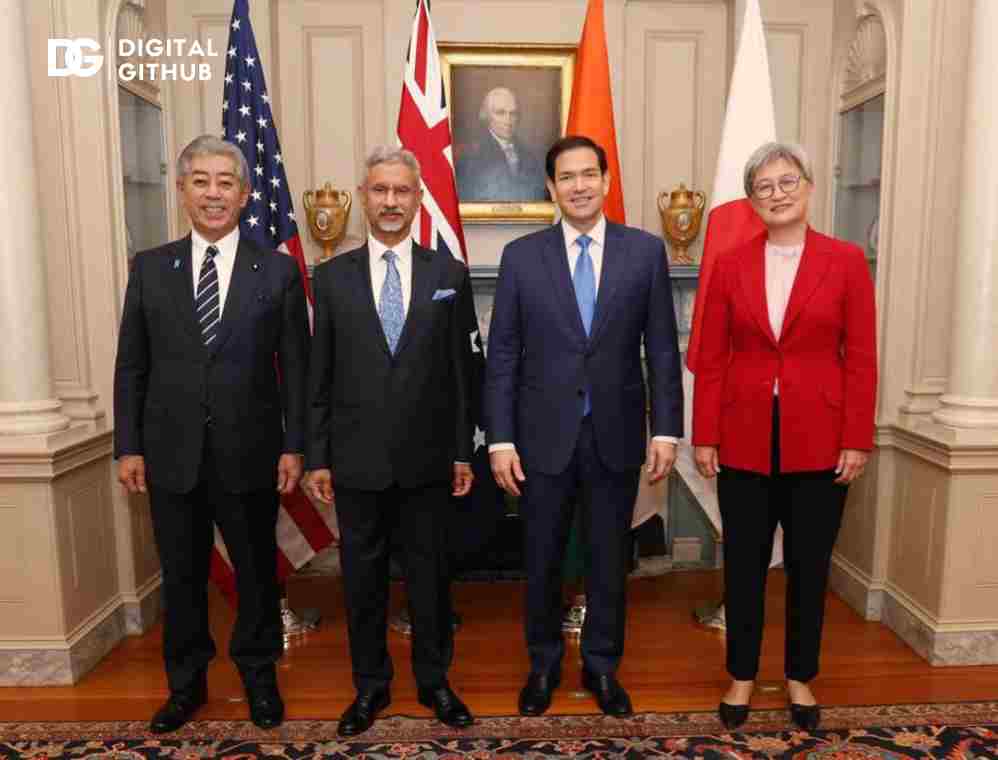
Quad Foreign Ministers Strongly Condemn Pahalgam Terror Attack, Call for United Front Against Terrorism
In the wake of the recent terrorist attack in Pahalgam, Jammu and Kashmir, that claimed the lives of brave Indian soldiers, the foreign ministers of the Quad nations—India, the United States, Japan, and Australia—have jointly expressed strong condemnation and reaffirmed their commitment to standing against terrorism in all its forms.
The coordinated statement, while steering clear of directly naming any country, sent a clear and unified message: terrorism is unacceptable, and there must be accountability for those who fund, shelter, or support such acts.
A Unified Voice Amidst Tragedy
The statement, released following the Quad ministerial meeting, extended heartfelt condolences to the families of the martyred soldiers and emphasized the importance of collective global efforts to root out terrorism. The ministers underscored that such attacks are not just acts of violence but direct assaults on peace, stability, and democracy.
Each country echoed a shared sentiment—that terrorism, regardless of its source or motive, cannot and should not be justified.
Subtle Yet Strong: The Unspoken Message
Though the joint statement refrained from naming Pakistan explicitly, the subtext was difficult to ignore. India has long maintained that Pakistan-based terror outfits, aided and abetted by state mechanisms, have been responsible for repeated cross-border attacks, including incidents in Kashmir.
The silence on naming Pakistan wasn’t an omission but a diplomatic decision. It allowed the Quad to present a united front without derailing broader geopolitical dialogues in the region. However, analysts argue that the omission doesn’t dilute the gravity of the condemnation—it simply reflects a strategic choice to prioritize collective diplomacy.
India’s Response: Grief and Resolve
Back home, the attack has reignited national grief and calls for justice. The ambush in Pahalgam, which targeted an army convoy, was a stark reminder that the region remains vulnerable despite years of security efforts.
India’s External Affairs Minister, who participated in the Quad meeting, has reiterated that India will continue to fight terror relentlessly and work with its global partners to isolate those who threaten its peace.
“The message is clear: India is not alone in this fight. The world is watching. And the world is standing with us,” said a senior government official familiar with the developments.
A Broader Security Dialogue
Beyond just a reaction to the Pahalgam attack, the Quad’s condemnation is part of a larger commitment to regional and global security. The ministers reaffirmed the importance of the Indo-Pacific remaining free, open, and inclusive, and acknowledged that terrorism—whether state-sponsored or not—remains one of the gravest threats to global peace.
The Pahalgam incident, tragic as it is, serves as a catalyst for renewed cooperation between the Quad nations. Joint counter-terrorism initiatives, intelligence sharing, and strategic coordination are expected to be strengthened in the aftermath.
Civilian Sentiment and the Need for Accountability
The mood on the ground in India is one of mourning—but also of determination. Citizens and veterans alike have voiced frustration over the recurring nature of such attacks and the lack of tangible consequences for those responsible.
Families of the fallen soldiers have not only demanded justice but also urged international players to move beyond statements and towards concrete action—sanctions, blacklisting of known terror groups, and pressure on countries providing safe havens.
Looking Ahead: What Comes Next?
As the region reels from the loss, the international backing from Quad provides a glimmer of support and solidarity. But for many, words must now be followed by real-world measures.
While diplomacy treads a careful path, the underlying consensus is undeniable—terrorism must be rooted out at its source. Whether through stronger surveillance, coordinated military exercises, or diplomatic isolation of those aiding terror, the path forward demands unwavering resolve.
The Quad may have chosen not to name Pakistan this time, but their statement was anything but soft. It was a reminder that global alliances are watching, responding, and standing together against forces that threaten peace.
For the families of those who lost their lives, and for a nation seeking justice, that solidarity offers both comfort and hope.
Disclaimer
The information and content shared on digitalgithub.com — including articles, blogs, news, guides, and other resources — is intended for general informational and educational purposes only. We do not guarantee the completeness, reliability, or suitability of any information. Always seek the guidance of a qualified professional before making decisions based on the information you read. Use this site at your own risk.