
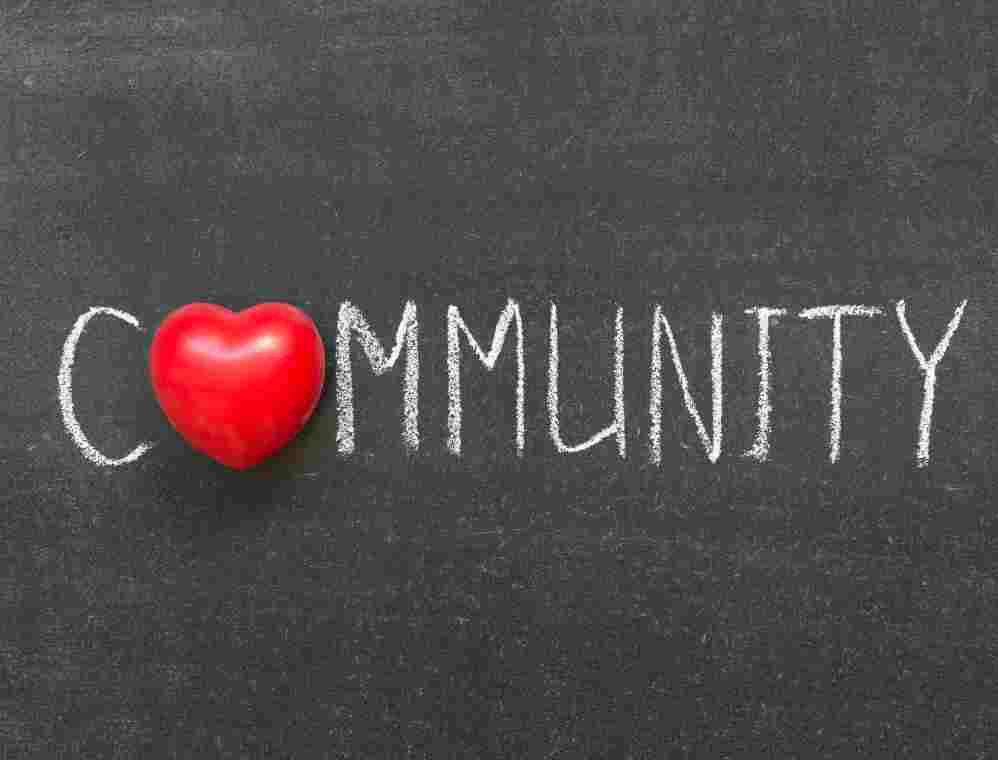
What is Community Love – Friendships as Central Relationships, Not Just Side Bonds
When we talk about love, most people immediately think of romance. The cultural script is clear: fall in love, build a life together, and put your romantic partner at the very center of your world. Friendships, meanwhile, are often painted as extras—nice to have, but never the main course.
But what if this narrative leaves something out? What if friendships can be more than background support for our romantic lives? What if they can be central, primary, life-shaping relationships in their own right?
That’s where the concept of community love comes in. It’s an idea that challenges how we define connection, commitment, and intimacy. At its heart, community love is about seeing friendships not as secondary, but as vital bonds that deserve as much care, time, and intentionality as romance.
Let’s dive deep into what this really means.
The Cultural Hierarchy of Relationships
Most societies operate on what some sociologists call the “relationship escalator.” It’s the assumption that the highest form of human connection is a monogamous romantic partnership. You meet someone, fall in love, commit, move in together, get married, and maybe have children.
Every other bond is expected to orbit around that central pairing. Your friends? They’re important, but the expectation is that they’ll fade into the background once you’re coupled. Your family? They matter, but the romantic bond still comes first.
This hierarchy shapes how people prioritize their time, money, and energy. It’s why weddings are treated as life’s most important celebration, while deep friendships rarely get similar recognition. It’s why phrases like “just friends” diminish a bond that might, in fact, be life-defining.
But does love have to be structured this way?
Defining Community Love
Community love flips the script. It acknowledges that love doesn’t only flow through romance. It can thrive in friendships, chosen families, creative collaborations, and neighborly connections.
Community love says: a friend can be your soulmate.
It says: a group of people can provide the stability, passion, and care we often expect from one partner.
It says: love doesn’t need to be narrowed down to one channel—it can be plural, abundant, and shared.
At its core, community love is about valuing friendships as primary relationships—not backup plans or temporary placeholders.
Why Friendships Have Been Undervalued
To understand why community love feels radical, we need to ask why friendships are so often dismissed.
- Capitalism and the nuclear family model
Modern economies have centered on the nuclear family—two adults and their children living in a self-contained household. This model encourages isolation from wider networks and pushes friendships into “optional” status. - Romantic idealization
Movies, books, and songs almost always place romance at the top of life’s goals. Friendship is the subplot, not the climax. - Gender roles and heteronormativity
For centuries, men were taught to prioritize work and wives, while women were expected to pour everything into husbands and children. Friendships were labeled frivolous or even suspicious if too close. - Lack of rituals
We have weddings, anniversaries, and family reunions to honor romantic and blood ties. But how do we mark the significance of a twenty-year friendship? Society rarely gives us a script.
When you add all this up, it’s no wonder friendships are often treated as “extra.”
The Power of Making Friendships Central
Shifting toward community love means taking friendships seriously—not just as companions for brunch or happy hours, but as pillars of our lives.
Here’s what happens when we center friendships:
- Emotional richness expands. Instead of leaning on one partner for everything, you spread out support, laughter, and wisdom across multiple bonds.
- Loneliness decreases. Even in a romantic relationship, people often feel isolated. A strong web of friendships provides a buffer.
- Resilience grows. If a romantic relationship ends, you’re not left without a safety net—you already have deep connections.
- Identity feels freer. Friends often accept parts of us that romantic partners might not fully understand.
- Joy multiplies. Different friends bring out different sides of us, creating a more colorful life.
Community love doesn’t replace romance; it enriches it by ensuring no one person carries the burden of being your “everything.”
Historical and Cultural Roots of Community Love
The idea of community love isn’t new—it’s just been overshadowed.
- Ancient Greece distinguished between different kinds of love: eros (romantic), philia (friendship), storge (family), and agape (universal). Friendship wasn’t seen as lesser; it was celebrated.
- Indigenous communities across the world have long valued kinship networks that go beyond nuclear families. Caregiving, child-rearing, and emotional support were shared across the community.
- Queer cultures have built chosen families for generations. When traditional structures excluded them, friendships became lifelines—sources of unconditional love, celebration, and survival.
- Religious traditions often uplifted community love. Monks, nuns, and spiritual groups built entire lives around brotherhood, sisterhood, and collective devotion.
In truth, the centrality of romance is more of a modern Western obsession than a timeless truth.
What Community Love Looks Like in Practice
Community love isn’t just a theory—it’s something you can live. It can look like:
- Choosing to live with friends long-term, not just as a stopgap until marriage.
- Celebrating friendship anniversaries with as much intention as wedding anniversaries.
- Sharing resources—cars, meals, even finances—within a trusted friend group.
- Building rituals: weekly dinners, annual trips, or holiday traditions that anchor your bond.
- Being present during life’s highs and lows with the same seriousness as a spouse might be.
It’s about taking the word “friend” out of the category of “casual” and into the category of “core.”
The Language Problem
Part of the challenge is language. We don’t have many words to describe friendships that are deeper than casual but not romantic. We use terms like “best friend,” but even that can feel juvenile.
Community love invites us to expand our vocabulary. Some people use terms like:
- Platonic life partner – a friend you build a shared life with.
- Chosen family – bonds formed by choice, not blood.
- Anchor friend – the person you return to again and again for grounding.
Language matters because it gives legitimacy. When we have words, we can more easily claim the importance of these bonds.
Friendship as a Form of Intimacy
Too often, intimacy is equated with sex. But intimacy is really about closeness, trust, and vulnerability. By that definition, friendships are some of the most intimate relationships we’ll ever know.
Think of the friend who knows your family history, your secrets, your habits, and your insecurities. Think of the one you call when you’re crying in your car or celebrating a big win.
That’s intimacy. And it deserves recognition.
The Myth of Self-Sufficiency
Community love also pushes back against the myth of self-sufficiency. Modern culture often praises independence—handling everything on your own or within a small nuclear unit. But humans are social beings. We thrive in networks, not in isolation.
Leaning on friends isn’t weakness. It’s wisdom. It acknowledges that love doesn’t run out when it’s shared—it multiplies.
Challenges of Centering Friendships
Of course, community love isn’t without challenges.
- Social misunderstanding. If you cancel a date to support a friend, some may see it as “less important.”
- Legal structures. Marriage comes with tax benefits, healthcare rights, and legal recognition. Friendships don’t.
- Boundaries. Without societal scripts, friends have to define their own expectations—how much time, money, or care they share.
- Romantic jealousy. Partners may feel threatened if friendships feel “too central.”
But these challenges are not insurmountable. They simply require communication, creativity, and advocacy for broader recognition.
Building a Culture of Community Love
So how do we normalize friendships as central?
- Ritualize them. Host friendship ceremonies, create vows, or mark milestones together.
- Prioritize them. Put friend time in your calendar with the same weight as date nights.
- Invest in them. Don’t only save money for romantic getaways; plan big adventures with friends.
- Advocate for them. Talk openly about how much your friendships matter.
- Model them. Show younger generations that friends can be chosen family, not side characters.
It’s about shifting both personal habits and collective culture.
Stories of Community Love
Everywhere, people are already living this way.
- A pair of women who have been friends for thirty years buy a house together and raise each other’s kids.
- A group of queer friends form a communal living arrangement, supporting each other emotionally and financially.
- Two best friends hold a public ceremony, exchanging vows of lifelong commitment, even without romance.
- Elderly neighbors build daily rituals of care—checking in, cooking meals, sharing laughter—becoming each other’s chosen family.
These stories remind us that love wears many costumes, and friendship is one of its most enduring forms.
Why Community Love Matters in Today’s World
In an era of rising loneliness, community love is more than a philosophy—it’s a survival strategy.
Social isolation is linked to poor health, depression, and shorter lifespans. But strong friendships protect against these outcomes. They give us meaning, resilience, and joy.
As more people delay marriage, remain single, or explore nontraditional relationships, friendships are becoming even more crucial. Community love meets this moment by affirming that connection doesn’t have to follow one script.
A Call to Reimagine Love
At the end of the day, community love is about abundance. It’s about refusing to squeeze all our needs into one relationship, and instead weaving a web of love that’s strong, diverse, and sustaining.
It asks us to stop treating friendships as side bonds and start treating them as central. Because they are.
Your best friend who holds your history? That’s love.
Your crew who shows up for every birthday, every breakup, every Tuesday night dinner? That’s love.
The people who make you feel alive, safe, and seen? That’s love.
And maybe, just maybe, that’s the kind of love that will save us.
Final Thoughts
When we widen the lens of love beyond romance, we see that we’ve been surrounded by it all along—in friends who know us, care for us, and choose us again and again.
Community love isn’t a rejection of romance. It’s an expansion of love itself. It’s about building lives where friendships are celebrated, nourished, and honored as the central relationships they truly are.
Because sometimes the greatest love story of your life isn’t about who you marry. It’s about the friends who walk beside you every step of the way.
Disclaimer
The information and content shared on digitalgithub.com — including articles, blogs, news, guides, and other resources — is intended for general informational and educational purposes only. We do not guarantee the completeness, reliability, or suitability of any information. Always seek the guidance of a qualified professional before making decisions based on the information you read. Use this site at your own risk.